
This guest post is written by Dr. Chena Cayton, Principal of South Central High School in Pitt County Schools, North Carolina. South Central is in its second year of implementing Capturing Kids’ Hearts and was recently nominated as a CKH National Showcase School after earning Rising Star distinction in its first year. The post originally appeared in EdNC.
On a personal note, I’m especially grateful for both Dr. Cayton’s professional influence and her friendship. Over the past two years, I’ve had the privilege of getting to know her well, and what stands out most is her steady commitment to students and to doing what is right for them, even when it is hard. The words below reflect not just her leadership, but her care for people. Thank you for modeling greatness, Chena.
“I didn’t get my doctorate to hide paper bunnies all around the school.”
That is what my assistant principal said to me as we walked the halls just before spring break. I had been the principal for only two months and was still learning the school and its needs. I arrived at the beginning of a new semester knowing that the work ahead would require intentional leadership and a clear sense of purpose.
As I walked the halls, I saw spaces of opportunity that could more intentionally reflect student work, school pride, and a shared vision for who we wanted to become. It was clear that strengthening climate and culture would not happen by chance, but through deliberate collective effort.
In a school setting, culture cannot be left to chance or assumed to develop on its own. While operational systems matter, they are insufficient without strong relationships. Establishing a positive culture has to begin with people, starting with staff buy-in and student morale.
So I decided to hide paper bunnies around the school.
At the time, it felt a little ridiculous. I was desperate for a way to engage students in something fun and positive, and I needed something that could happen quickly. I thought about what had brought me joy as a child, and hide-and-seek came to mind. I printed paper bunnies, taped them up, and hoped that a small moment of fun might spark something more.
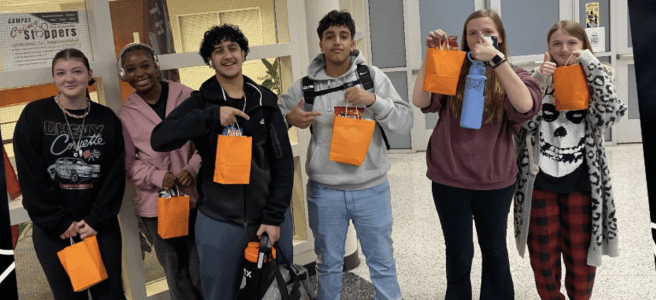
The idea was simple. I wanted students to feel excited as they searched for a chance to win a small goodie bag from their principal. More importantly, I wanted them to see me differently, not just as the principal in the office or the evaluator in the room. I wanted students to know that I cared about our school being a place where they belonged.
So, I hid paper bunnies all around the school and sent a frantic email to students before they arrived. In the email, I claimed that someone had played a prank on our school and let bunnies loose throughout the building. I told students that if they captured a bunny, they would be rewarded.
Students quickly realized when they arrived that the email was not a complete hoax and that there were no real bunnies on the loose. Still, they were filled with excitement as they searched for the paper bunnies hidden throughout the halls. Paper bunnies became the avenue I used to bring joy and connection into our building.
They created opportunities for students to giggle and interact positively as they searched the hallways. In those moments, students were not worried about how they were being perceived or stressed about academic performance. Instead, they experienced school as a place of belonging rather than one defined by rules and compliance. One teacher described how “the shared anticipation and celebration not only humanized leadership in the eyes of students, but also increased classroom engagement.”
What I noticed most was not just the excitement in the hallways, but what followed once students returned to class. The energy carried with them. Students were more settled, more willing to participate, and more present in the learning that day. Teachers shared that classrooms felt lighter and more focused, not because instruction had changed, but because the conditions had. As one teacher stated, “my students were more focused and motivated in their work throughout the day.”
Seeing this impact encouraged me to continue looking for simple, fun ways to engage students within our school community. For nearly every holiday or special event, I now walk the halls before students arrive, quietly hiding some sort of trinket. Over time, paper bunnies expanded to include snowmen, spiders, turkeys, and other small surprises one might not expect in a high school. The objects change, but the purpose remains the same. Each act represents a small investment in relationships and a reminder that joy and people matter. As one teacher noted, “students see administration in a more positive, approachable light, and this fosters mutual respect across roles.”
What began as paper bunnies has grown into a tradition students look forward to. They wait for the early morning email warning them about spiders on the loose or a mischievous leprechaun flooding the school with shamrocks. These moments of anticipation have become woven into the fabric of our community. As one teacher reflected, “these experiences build a school culture where everyone feels seen, supported, and connected.”
This same intentionality extends to how I work with staff. If we want students to feel a sense of belonging, the adults in the building must experience those same conditions. I realized I needed to focus not only on student joy, but also on adult joy.
Each month, I look for a national holiday or seasonal moment to celebrate our teachers. Whether it is National Popcorn Day, a Turkey Hunt, or the 12 Days Before Winter Break, these moments provide tangible expressions of appreciation. Giving is how I show care. I want staff to enjoy working at our school and to know they are valued. One teacher described it this way: “When leadership plans small moments of joy during busy times, it shows that staff morale matters.”
These gestures are intentionally offered to everyone and are not tied to performance. Appreciation is separated from evaluation. Teachers reflected that these activities “recognize teachers as people, not just employees” and that trust is built because “these are extra things that did not have to be done.”
These moments help build a community where faculty feels supportive and united. One teacher noted, “these moments break down barriers and foster stronger connections among staff and students.” Another shared, “these activities allowed me to connect with colleagues I may not have otherwise interacted with.” When adults feel valued and connected, they are more likely to create classrooms where students feel safe, supported, and ready to learn.
Paper bunnies will never appear on a data dashboard, but their impact is real. They are one example of how leaders can intentionally create moments that remind people they belong. Over time, those moments shape how people treat one another and how willing they are to do the hard work together.
When my assistant principal said, “I didn’t get my doctorate to hide paper bunnies,” my response was simple.
I did.
I earned my doctorate to lead a learning community where relationships, belonging, and well-being are treated as essential conditions for success. Effective principals understand that climate and culture are not add-ons to the work. They are the work.
Sometimes leadership looks like data analysis and instructional planning. Other times, it looks like paper bunnies hidden in hallways before the school day begins.
Both matter.
And often, it is the quieter, relational leadership moves that send the clearest message of all:
You belong. You are valued. This is a place where people matter.
#ChooseToBeGreat

 CHOOSE TO BE GREAT